
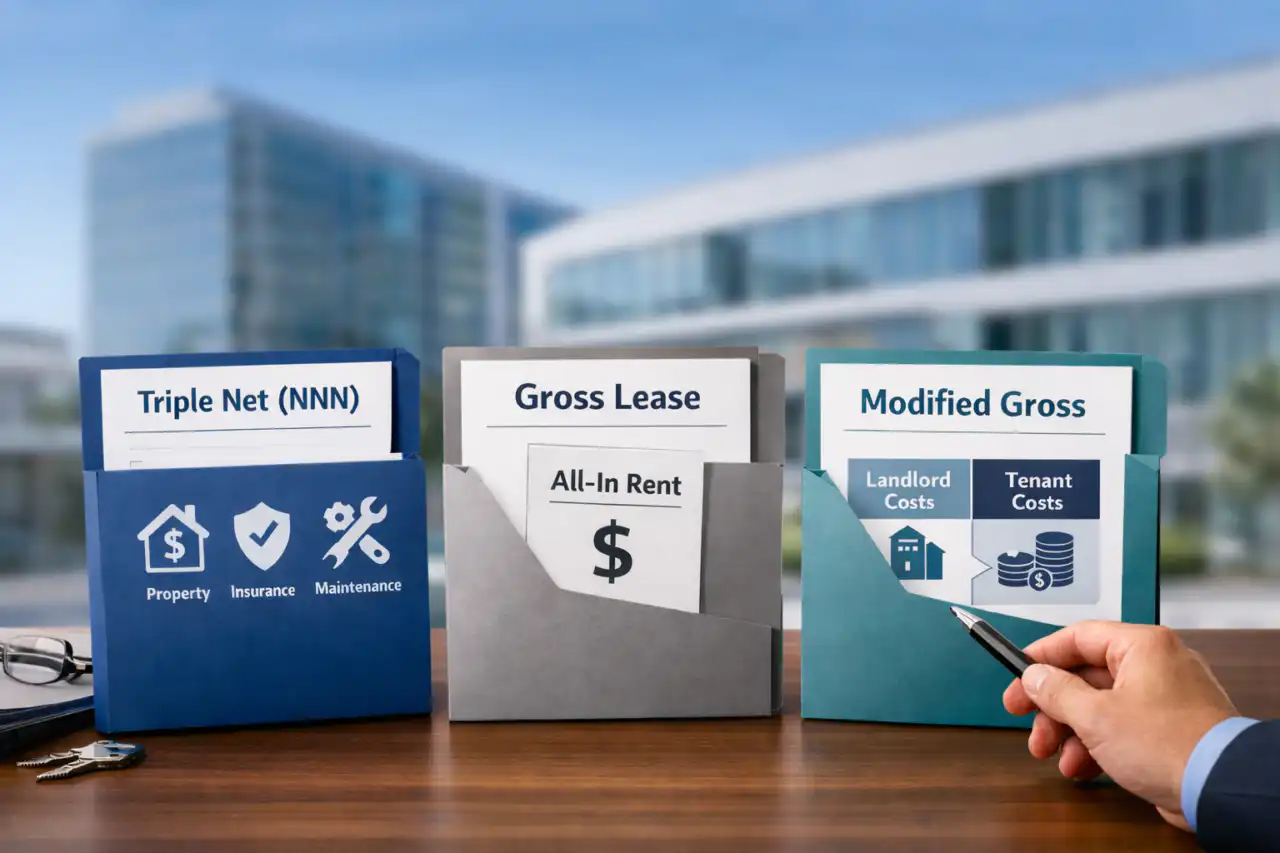
Commercial lease structures are one of the most overlooked parts of a real estate transaction. Most negotiations begin with a single question — how will rent actually be calculated — and the answer depends on which of the three common frameworks the parties use: triple net, gross, or modified gross. Each allocates operating costs differently between landlord and tenant, and each has meaningful implications for both the true cost of occupancy and the long term relationship between the parties.
Understanding these commercial lease structures is essential before signing any agreement. A tenant who assumes base rent is the only recurring obligation may later discover substantial additional charges. A landlord who selects the wrong structure may find that property expenses outpace the rent collected. Knowing how each lease type functions allows both sides to negotiate with clear expectations.
What Is a Triple Net Lease
A triple net lease, commonly abbreviated as NNN, shifts most of the property’s operating costs to the tenant. In addition to base rent, the tenant is responsible for three primary categories of expense: property taxes, building insurance, and common area maintenance. Together, these are the three “nets” in the name.
Triple net leases are most common in single tenant retail, industrial, and standalone commercial buildings. They are favored by landlords because they create predictable income with limited exposure to rising operating costs. Tenants benefit from lower base rent, but they must plan carefully for variable costs that may change from year to year.
What Is a Gross Lease
A gross lease, sometimes called a full service lease, works in the opposite direction. The tenant pays a single fixed rent, and the landlord absorbs the cost of property taxes, insurance, maintenance, and in some cases utilities. This structure is most common in multi tenant office buildings where calculating individual expense shares for every tenant would be impractical.
Gross leases simplify budgeting because the monthly rent reflects the full cost of occupancy. For landlords, however, the structure concentrates risk. If operating expenses rise unexpectedly, the landlord bears that cost until the lease is renewed or renegotiated.
What Is a Modified Gross Lease
Modified gross leases sit between the two extremes. The tenant and landlord divide operating expenses in a negotiated way, often with the landlord covering certain baseline costs during the first year and the tenant absorbing increases above that baseline in future years. This mechanism is typically described as an expense stop or base year provision.
Because the terms vary significantly from lease to lease, modified gross arrangements require careful review. No two modified gross leases allocate costs in exactly the same way, and the specific language of the agreement determines which party ultimately pays for what.
How Lease Structure Affects Total Occupancy Cost
The quoted base rent in a commercial lease rarely tells the full story. A tenant comparing two properties on base rent alone may overlook significant differences in expense exposure. A triple net lease with low base rent may ultimately cost more than a gross lease with higher base rent once taxes, insurance, and maintenance are factored in.
For this reason, commercial tenants often evaluate leases on an effective rent basis. This calculation combines base rent with projected operating costs to produce a more accurate comparison. Landlords presenting properties to prospective tenants should be prepared to explain how their chosen lease structure translates into total occupancy cost.
Risk Allocation Between Landlord and Tenant
Each of these commercial lease structures represents a different allocation of financial risk. In a triple net lease, the tenant absorbs the risk of rising expenses but also benefits if costs remain stable. In a gross lease, the landlord carries that risk entirely. Modified gross leases distribute the risk based on the base year or expense stop provisions negotiated by the parties.
Market conditions often influence which structure is preferred. During periods of rising property taxes or insurance premiums, landlords may push toward net structures to protect margins. Tenants, in turn, may favor gross leases to lock in predictable occupancy costs. Negotiations frequently focus not only on the base rent figure but on which party is best positioned to manage variable expenses over time.
Common Pitfalls in Lease Structure Review
Commercial leases are long documents, and the expense provisions are often buried within sections on common area maintenance, operating expenses, or additional rent. Parties who focus only on the base rent figure may miss important clauses that affect the bottom line.
Key provisions to review include how operating expenses are defined, what costs may be excluded or capped, how shared expenses are allocated among tenants in multi tenant properties, and whether the landlord may adjust the tenant’s pro rata share over time. Misunderstanding any of these terms can result in unexpected charges later in the lease term.
The Role of Legal Counsel
Commercial lease structures involve more than rent calculations. The underlying provisions determine how costs are allocated, how disputes are resolved, and how risk is shared over the life of the lease. An experienced commercial real estate attorney can review lease language to confirm that the stated structure actually operates as intended.
Legal counsel also helps identify inconsistencies between the lease summary and the detailed expense provisions. Clarifying these points before signing prevents disputes during the lease term and supports stronger working relationships between landlords and tenants.
Protecting Your Commercial Lease Position
Understanding the differences between triple net, gross, and modified gross commercial lease structures allows both landlords and tenants to negotiate with confidence. Each structure has its place in the commercial market, but the right choice depends on the property, the parties, and the long term goals of the transaction.
At Kleiner Law Group, we assist landlords, tenants, and investors in reviewing and negotiating commercial lease agreements across South Florida. Our team ensures that lease structures are clearly defined and obligations are properly allocated. If you are entering a commercial lease, call us today at 305-517-1392 for experienced transactional guidance.
