
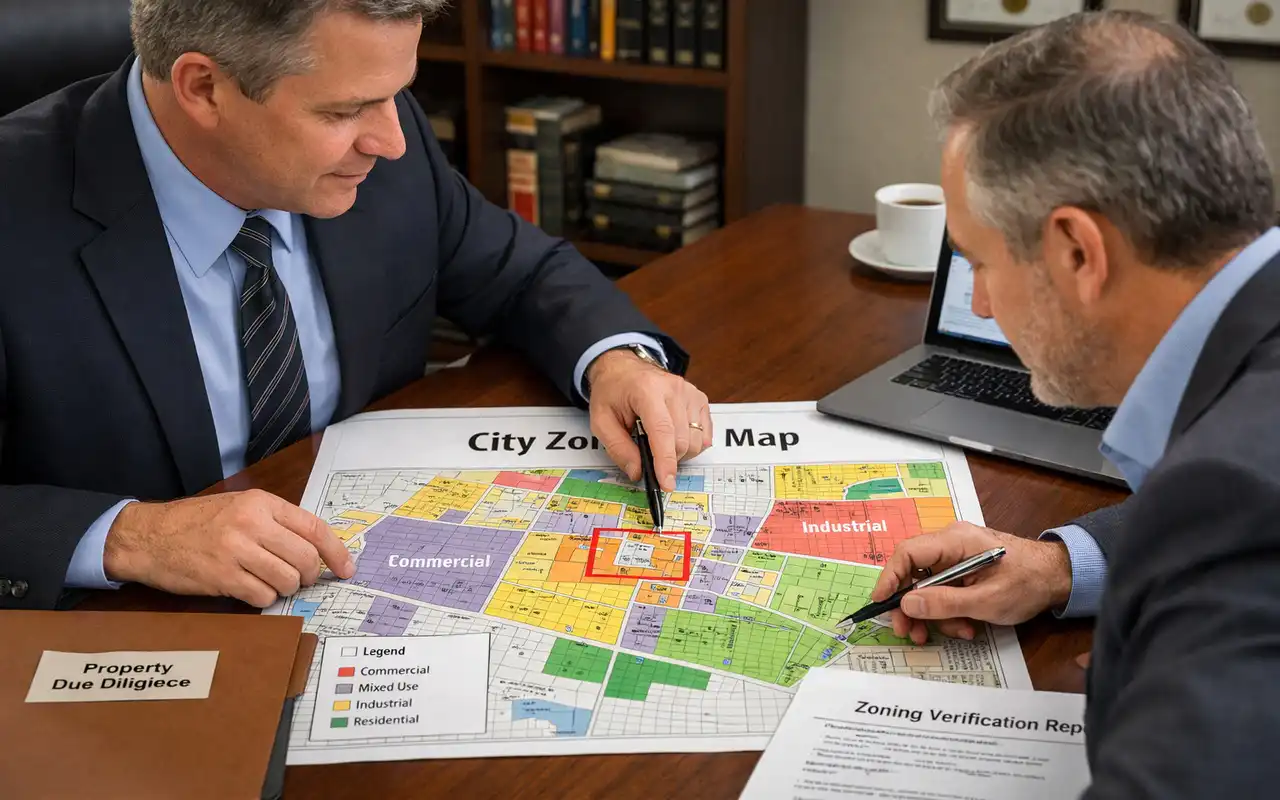
Many commercial transactions fall apart not because of price or financing, but because of overlooked commercial zoning issues. Buyers often focus on income, tenant strength, and physical condition while assuming the property’s legal use is secure. That assumption can create serious problems during due diligence.
Zoning laws regulate how land can be used, what structures may be built, and how properties may be modified. If a property does not comply with current zoning requirements, the buyer may face operational limits, redevelopment barriers, or municipal enforcement actions. Identifying commercial zoning issues early protects both timeline and investment strategy.
Nonconforming Use Problems
A frequent zoning obstacle is legal nonconforming use. This occurs when a property was lawfully established under older zoning rules but no longer complies with current classifications.
While the existing use may continue, expansion, reconstruction, or a change in operations can trigger compliance requirements. For example, an industrial building operating in an area now zoned for mixed use may continue functioning, but it may not be permitted to enlarge the structure or rebuild if damaged beyond a certain percentage.
Buyers intending to reposition, renovate, or redevelop must confirm whether the current use is conforming. Failure to do so can reduce long term value and eliminate future flexibility.
Change of Use Restrictions
Commercial properties often change hands with new business plans in mind. A buyer may intend to convert office space into medical use, retail space into a restaurant, or warehouse space into distribution. Each of these transitions may require zoning confirmation or additional approvals.
Even if the structure remains intact, a change of use can trigger new parking ratios, fire safety standards, impact fees, or conditional use permits. Municipalities frequently review traffic patterns, density, and compatibility with surrounding properties before approving these changes.
If these commercial zoning issues are discovered late in due diligence, closing may be delayed while applications are filed or hearings are scheduled. In some cases, the proposed use may not be permitted at all.
Parking, Density, and Setback Limitations
Zoning compliance is not limited to use classification. Physical development standards can significantly affect property value. Parking requirements often depend on square footage and use type. A buyer planning expansion may discover the lot cannot support additional required spaces.
Density restrictions can limit the number of units in mixed use or multifamily developments. Height limits and setback rules may restrict vertical or horizontal expansion. These factors directly affect redevelopment feasibility and projected return on investment.
Reviewing site plans and municipal codes before entering contract helps investors evaluate whether their business model aligns with zoning constraints.
Special Use Permits and Conditional Approvals
Some commercial operations require special approvals from local governments. These may include medical facilities, schools, alcohol sales, automotive uses, or high intensity operations.
These approvals are sometimes tied to a specific operator or set of conditions. If ownership changes, the permit may require transfer approval or reapplication. Buyers who assume permits automatically carry over risk operational delays after closing.
Verifying the status of special approvals is an essential step in addressing commercial zoning issues before funds are committed.
Certificate of Occupancy and Code Compliance
A valid certificate of occupancy confirms that a building meets zoning and building code requirements for its approved use. Missing or outdated certificates frequently stall commercial closings.
If renovations were performed without permits or final inspections were never completed, municipalities may refuse to confirm lawful occupancy. Correcting these issues can require inspections, engineering reports, or retroactive approvals.
Buyers and lenders often require confirmation of a valid certificate before closing. Resolving these matters early reduces last minute risk.
Why Early Zoning Review Matters
Zoning problems rarely resolve quickly. Variances, rezonings, and special approvals often require formal applications, professional studies, and public hearings. These processes take time and introduce uncertainty.
Waiting until the final stages of due diligence to uncover commercial zoning issues puts pressure on both parties. Early investigation allows buyers to assess feasibility and negotiate accordingly. Sellers who proactively confirm zoning compliance strengthen their position and reduce transaction friction.
The Role of Legal Counsel
Commercial zoning review involves interpreting municipal codes, prior approvals, and land use classifications. An experienced commercial real estate attorney analyzes zoning status in the context of the buyer’s intended use and long term strategy.
Legal counsel can identify inconsistencies between recorded approvals and actual use, confirm whether variances are needed, and coordinate with local authorities when clarification is required. This proactive approach reduces uncertainty and protects investment capital.
Protecting Your Commercial Transaction
Commercial zoning issues can limit operations, reduce redevelopment potential, and delay closings. Buyers should confirm that the property’s current and intended uses comply with local regulations. Sellers should identify potential zoning concerns before bringing a property to market.
At Kleiner Law Group, we assist commercial property owners and investors in evaluating zoning compliance and addressing legal risks before they threaten a transaction. If you are buying, selling, or repositioning commercial real estate, call us today at 305-517-1392 to ensure zoning issues do not derail your deal.
