
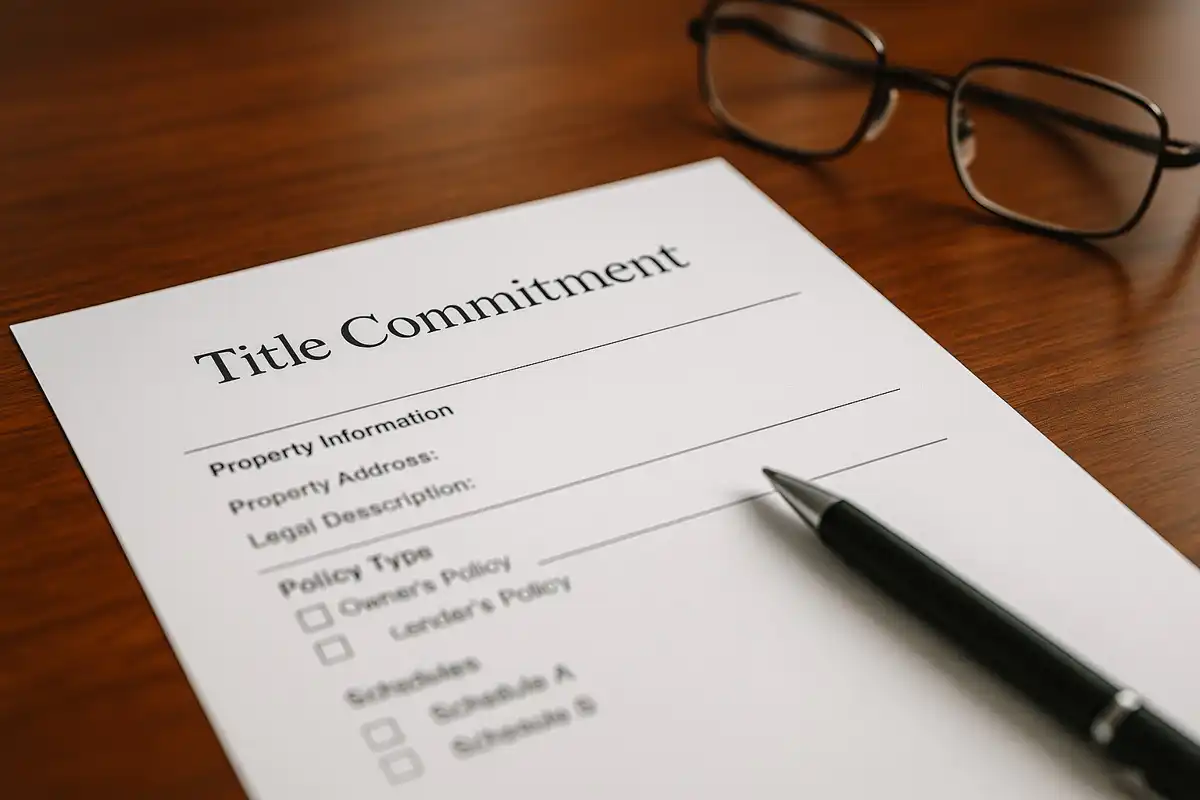
Before any property changes hands in Florida, a title commitment is issued to confirm ownership and identify potential issues. It outlines the conditions that must be met before title insurance can be provided and before the transaction can close. For buyers, lenders, and investors, understanding a title commitment Florida document is essential to ensure the property’s title is clear and free of surprises.
What Is a Title Commitment
A title commitment is a formal promise by the title insurance company to issue title insurance once the listed requirements are satisfied. It provides a preview of the final policy, showing what will be covered and what exceptions or restrictions will remain in place.
The document is prepared after a detailed title search, which examines public records for past transfers, liens, mortgages, judgments, or other encumbrances. This information is then compiled into the commitment to give all parties a full picture of the property’s legal status before closing.
In Florida, title commitments serve as both a disclosure and a guide. They ensure that the seller can legally transfer ownership, that any debts tied to the property will be cleared, and that the buyer will receive a marketable title once the deal is complete.
The Main Sections of a Title Commitment
Every title commitment Florida document is divided into distinct sections called schedules. Each one plays a specific role in identifying ownership, conditions, and exceptions.
Schedule A provides the property’s basic information, including the current owner’s name, the proposed insured parties, the type of title policy, and the legal description of the property. Errors in this section can delay closing, so accuracy is critical.
Schedule B-I lists the requirements that must be met before the title company issues the policy. These might include paying off existing mortgages, recording new deeds, or clearing unpaid taxes and liens.
Schedule B-II outlines the exceptions to coverage. These are items that the title policy will not insure against, such as easements, restrictive covenants, or rights of others that remain recorded against the property. Buyers should review this section closely, as some exceptions can affect future development or use.
A careful review of each section ensures no overlooked issues could affect ownership or financing.
Why Reviewing a Title Commitment Matters
Reviewing the title commitment is not just a formality. It protects buyers, sellers, and lenders from unexpected liabilities that could surface after closing. For example, an unreleased mortgage or unpaid tax assessment can create future claims. An unrecorded easement could restrict access or use of part of the property.
Addressing these items before closing allows time to secure releases, record corrections, or clarify exceptions with the title company. It also ensures that all parties understand what restrictions, if any, will remain after the title policy is issued. For lenders, the title commitment provides confirmation that the property is suitable collateral for financing. For buyers, it provides peace of mind that ownership rights are clear and secure.
Common Title Issues in Florida
Florida’s real estate market presents unique challenges that make title review especially important. Common issues include unreleased mortgages, construction liens, and unpaid property taxes. Easements for utilities, access roads, or drainage systems often remain attached to the property. Older neighborhoods may still carry restrictive covenants that limit use, even if they are decades old. In coastal areas, shifting boundaries or outdated surveys can lead to discrepancies in legal descriptions. Reviewing the title commitment Florida document early helps uncover these issues while there is still time to resolve them.
The Attorney’s Role in the Process
An experienced real estate attorney plays an important role in reviewing title commitments. Attorneys analyze the commitment line by line, ensuring the ownership chain is complete and that all title requirements are satisfied. They also coordinate with title companies, lenders, and sellers to clear any outstanding issues before closing.
Attorneys explain each exception and identify whether it poses a practical or legal concern. For example, an easement for a utility line might be acceptable, while an unrecorded lien could threaten ownership rights. Having legal oversight ensures that title insurance coverage is comprehensive and that the final policy accurately reflects the property’s true condition.
How Title Commitments and Surveys Work Together
A title commitment often goes hand in hand with a property survey. The survey provides physical verification of boundaries, improvements, and easements, while the title commitment provides the legal background. Together, they confirm that what exists on the land matches what is recorded.
If the survey reveals an encroachment or access issue, the attorney can work with the title company to add exceptions or resolve conflicts before the deal moves forward. Coordinating both documents is one of the most effective ways to prevent disputes and protect property value.
Contact Us
At Kleiner Law Group, we help Florida buyers, sellers, and investors review title commitments and resolve title issues before closing. Our attorneys ensure your title commitment Florida documents are complete, accurate, and free of legal risks. For guidance on reviewing or resolving title commitments in your next transaction, call us today at 305-517-1392.
